

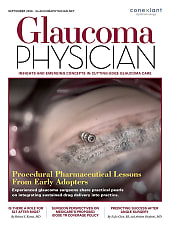


Clinical Scorecard: Why Do Half of Cataract Surgeons Avoid MIGS?
At a Glance
| Category | Detail |
|---|---|
| Condition | Glaucoma in patients undergoing cataract surgery |
| Key Mechanisms | Minimally invasive glaucoma surgeries (MIGS) and emerging glaucoma treatments including laser trabeculoplasty, drug-delivery platforms, and automated trabeculotomy |
| Target Population | Glaucoma patients undergoing cataract surgery |
| Care Setting | Ophthalmology surgical settings, specifically cataract surgery procedures |
Key Highlights
- Nearly half of glaucoma patients undergoing cataract surgery do not receive concomitant glaucoma treatment including MIGS.
- Surgeon hesitation to adopt MIGS is influenced by discomfort with gonioscopy, preference to refer glaucoma care, and past complications.
- Emerging treatments such as direct selective laser trabeculoplasty, intraocular lens drug-delivery systems, and automated femtosecond laser trabeculotomy may increase glaucoma treatment accessibility.
Guideline-Based Recommendations
Diagnosis
- Utilize gonioscopy skills for angle assessment when considering MIGS.
- Consider alternative diagnostic approaches compatible with emerging non-gonioscopic treatments.
Management
- Offer MIGS concomitantly with cataract surgery to glaucoma patients when appropriate.
- Consider emerging glaucoma treatments such as direct selective laser trabeculoplasty and sustained drug-delivery platforms for patients or surgeons uncomfortable with gonioscopy.
- Employ second-generation canaloplasty devices to minimize complications like hyphema.
Monitoring & Follow-up
- Monitor for complications post-MIGS, including bleeding and hyphema.
- Evaluate patient response to sustained drug-delivery implants and laser trabeculoplasty.
Risks
- Recognize that complications from MIGS may lead to surgeon reluctance to continue these procedures.
- Be aware of bleeding risks associated with angle surgery; alternative treatments may reduce this risk.
Patient & Prescribing Data
Glaucoma patients undergoing cataract surgery
Patients generally accept MIGS when offered; surgeon choice is a major factor in treatment avoidance.
Clinical Best Practices
- Educate and train surgeons in gonioscopy to increase comfort with MIGS procedures.
- Incorporate emerging glaucoma treatments that do not require gonioscopic skills to broaden treatment options.
- Address surgeon concerns and past negative experiences with MIGS to improve adoption rates.
- Consider patient preference and acceptance, which is generally favorable toward MIGS.
Related Resources & Content
This content is an AI-generated, fully rewritten summary based on a published scholarly article. It does not reproduce the original text and is not a substitute for the original publication. Readers are encouraged to consult the source for full context, data, and methodology.