
February 21, 2026
Video: Novel Vasodilator Targets Distal Outflow
At AGS 2026, Barbara Wirostko, MD, FARVO, reviewed top-line data on QLS-111, including additive IOP lowering on latanoprost.
https://res.cloudinary.com/broadcastmed/image/fetch/e_unsharp_mask:70,q_auto,c_fill,f_auto,w_170,h_230/dpr_auto/https://glaucomaphysician.net/media/4tbpmbe0/010926-omd-web-covers-staff.jpg
Ophthalmology Management
https://res.cloudinary.com/broadcastmed/image/fetch/e_unsharp_mask:70,q_auto,c_fill,f_auto,w_170,h_230/dpr_auto/https://glaucomaphysician.net/media/yegf1tcf/cover_jan26_web_new.jpg
Retinal Physician
https://res.cloudinary.com/broadcastmed/image/fetch/e_unsharp_mask:70,q_auto,c_fill,f_auto,w_170,h_230/dpr_auto/https://glaucomaphysician.net/media/th3js22v/0126-gp-cover-web.jpg
Glaucoma Physician
https://res.cloudinary.com/broadcastmed/image/fetch/e_unsharp_mask:70,q_auto,c_fill,f_auto,w_170,h_230/dpr_auto/https://glaucomaphysician.net/media/0jsmmz3o/op_1025_cover_final.jpg
Ophthalmic Professional
https://res.cloudinary.com/broadcastmed/image/fetch/e_unsharp_mask:70,q_auto,c_fill,f_auto,w_170,h_230/dpr_auto/https://glaucomaphysician.net/media/jdnlmuh3/1025-oasc-cover-final.jpg
The Ophthalmic ASC
https://res.cloudinary.com/broadcastmed/image/fetch/e_unsharp_mask:70,q_auto,c_fill,f_auto,w_170,h_230/dpr_auto/https://glaucomaphysician.net/media/aqbjxwjw/pp-cover.jpg
Presbyopia Physician
https://res.cloudinary.com/broadcastmed/image/fetch/e_unsharp_mask:70,q_auto,c_fill,f_auto,w_170,h_230/dpr_auto/https://glaucomaphysician.net/media/npjdtl1w/cp_november_cover.jpg
Corneal Physician
https://res.cloudinary.com/broadcastmed/image/fetch/e_unsharp_mask:70,q_auto,c_fill,f_auto,w_170,h_230/dpr_auto/https://glaucomaphysician.net/media/mvqdq2hc/nrp_cover_october_2024.jpg
New Retinal Physician
February 21, 2026
At AGS 2026, Barbara Wirostko, MD, FARVO, reviewed top-line data on QLS-111, including additive IOP lowering on latanoprost.
By Barbara M. Wirostko, MD, FARVO
February 21, 2026
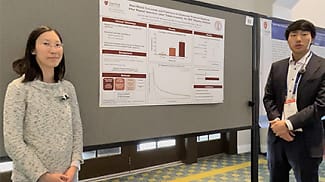
A University of Maryland study finds that retinal blood-flow autoregulation may signal early glaucoma before structural damage or vision loss is detectable.
By Jim Gallagher, senior managing editor
February 21, 2026
At AGS 2026, Lorraine M. Provencher, MD, outlined practical strategies for using patient assistance programs to reduce medication costs.
By Jim Gallagher, senior managing editor
February 20, 2026
Newer artificial intelligence tools are designed to automate routine administrative tasks and improve practice efficiency.
By Jim Gallagher, senior managing editor
February 20, 2026
In the 2026 AGS Lecture, Louis R. Pasquale, MD, FARVO, discussed how genetics, metabolism, and understanding the impact of myopia on the lamina support system may redefine optic nerve protection.
By Jim Gallagher, senior managing editor
February 20, 2026
Cecilia S. Lee, MD, MS, explores how deep learning models could enable earlier intervention and better outcomes.
By Cecilia S. Lee, MD, MS
February 20, 2026
At AGS 2026, Ian F. Pitha, MD, PhD, discussed the current role of MIBS and reviewed investigational devices under development.
By Jim Gallagher, senior managing editor
February 20, 2026
Data presented at AGS 2026 suggest the Calibreye system may offer pressure and medication reduction comparable to existing drainage implants.
By Jim Gallagher, senior managing editor
February 20, 2026
Steven R. Sarkisian Jr., MD, reviews early results with the extended-release travoprost implant.
By Steven R. Sarkisian, Jr., MD
February 20, 2026
At AGS 2026, Rachel Simpson, MD, highlighted the latest investigational technologies in minimally invasive glaucoma surgery.
By Jim Gallagher, senior managing editor
February 20, 2026
The AGS Cares program matches patients in need with volunteer surgeons across the United States.
By Jim Gallagher, senior managing editor
February 20, 2026
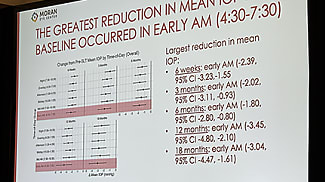
A small prospective study using home tonometry showed sustained reductions in intraocular pressure variability through 18 months.
By Jim Gallagher, senior managing editor
February 20, 2026
A retrospective observational study of more than 279,000 eyes may help guide patient selection for repeat SLT.
By Wendy Liu, MD, PHD,